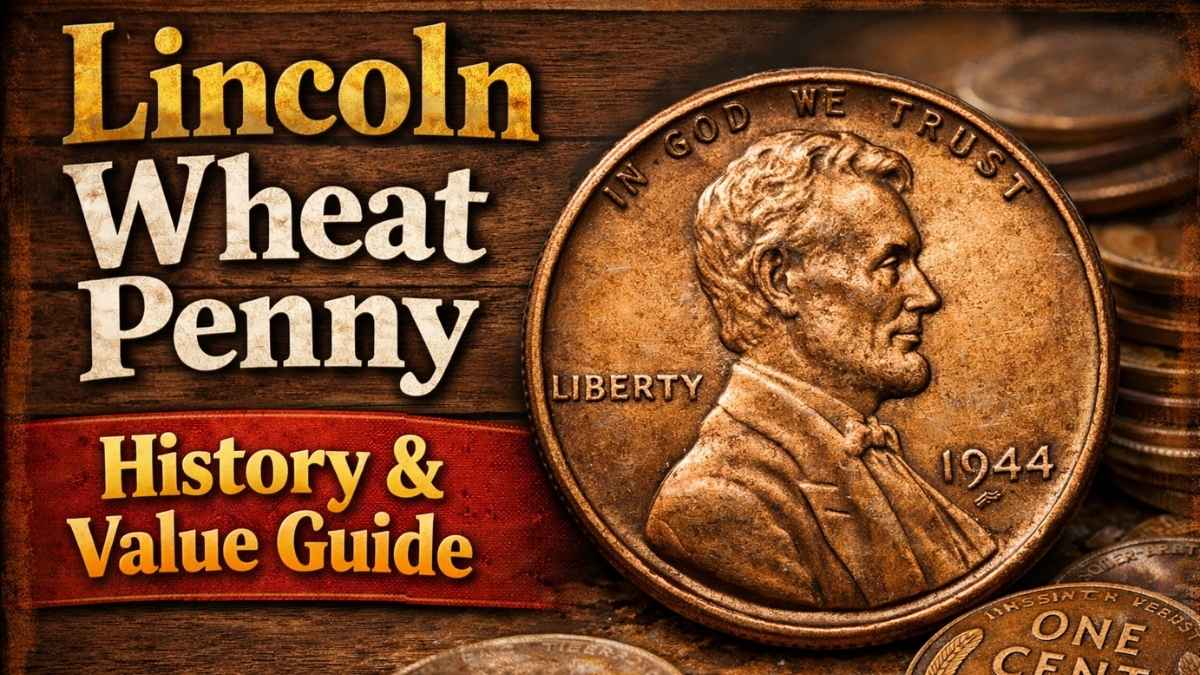
Lincoln Wheat Penny History and Value Guide: The Lincoln Wheat penny is one of the most beloved coins in American numismatics. First introduced in 1909 to honor President Abraham Lincoln’s centennial birthday, it quickly became a symbol of national pride and remains a cornerstone of coin collecting today. While millions were minted, certain dates, mint marks, and varieties make some Wheat pennies worth far more than their face value.
The Origins of the Lincoln Wheat Penny
The Lincoln Wheat penny was designed by Victor David Brenner and marked the first time a U.S. coin featured a real person rather than a symbolic figure. The obverse shows Lincoln’s portrait, while the reverse displays two wheat stalks framing the denomination. This design was used until 1958, when it was replaced by the Lincoln Memorial reverse.
Key Dates and Rarities
Some Wheat pennies are especially valuable due to low mintage or unique varieties. The 1909 S VDB penny is one of the most famous, with only 484,000 struck. Other key dates include the 1914 D, 1922 no D, and 1931 S pennies. These coins can be worth hundreds or even thousands of dollars depending on condition.
Minting Errors and Varieties
Minting errors add another layer of excitement to Wheat penny collecting. Doubled dies, repunched mint marks, and off center strikes are highly sought after. The 1955 doubled die penny is one of the most famous error coins in U.S. history, with dramatic doubling visible on the inscriptions. Such coins can command significant premiums.
Silver Content and Composition
Unlike nickels and dimes of certain years, Wheat pennies were not struck in silver. They were composed of 95 percent copper and 5 percent tin and zinc until 1943, when steel was used due to wartime shortages. The 1943 steel penny is a unique issue, and rare copper versions from that year are among the most valuable coins in existence.
Condition and Grading
The value of a Wheat penny depends heavily on its condition. Coins are graded on a scale from poor to perfect mint state. A well preserved coin with sharp details and original luster can be worth exponentially more than a worn example. Professional grading services provide certification that helps collectors and investors establish authenticity and value.
Market Demand
The Lincoln Wheat penny remains popular among collectors due to its historical significance and accessibility. While common dates are affordable, rare varieties and high grade coins generate excitement at auctions. Market demand continues to grow, making Wheat pennies a solid addition to any collection.
Collecting Tips
For those interested in collecting Wheat pennies, it is important to learn how to identify key dates, mint marks, and varieties. Building a collection by decade or focusing on rare issues can be rewarding. Proper storage in protective holders helps preserve condition, and researching auction results provides insight into current market trends.
The Legacy of the Lincoln Wheat Penny
The Lincoln Wheat penny is more than just a coin. It represents a turning point in American numismatics, introducing a real historical figure to everyday currency. Its enduring popularity reflects both its artistic design and its connection to Abraham Lincoln’s legacy. For collectors, it offers a tangible link to history and the thrill of discovering hidden value.
Conclusion
The Lincoln Wheat penny has shaped America’s numismatic legacy for over a century. From the rare 1909 S VDB to the famous 1955 doubled die, these coins continue to captivate collectors and investors alike. Whether common or rare, each Wheat penny tells a story of history, artistry, and national pride. For enthusiasts, this series remains one of the most rewarding areas of coin collecting, offering treasures that can be worth far more than their humble one cent denomination.