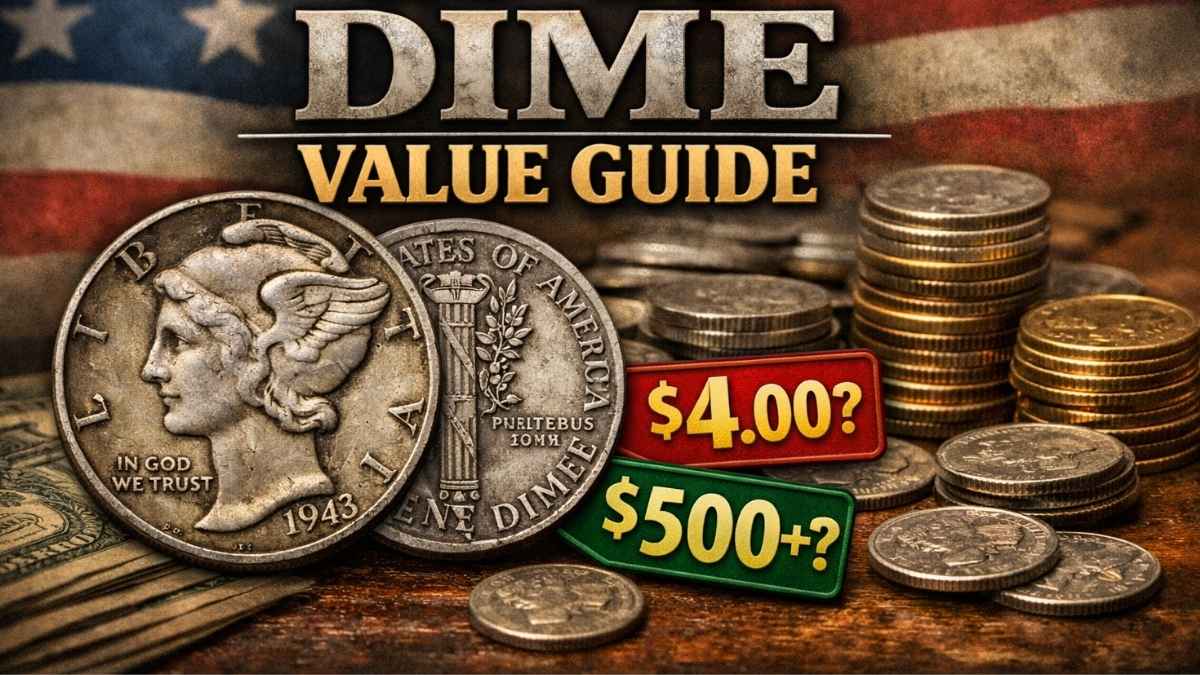
1943 Dime Value Guide: The 1943 dime, part of the Mercury dime series, is a fascinating piece of American numismatic history. Struck during World War II, these coins carry both monetary and historical significance. While many examples remain common, certain conditions, mint marks, and rare varieties can make a 1943 dime worth far more than its face value.
The Mercury Dime Design
The Mercury dime, officially known as the Winged Liberty Head dime, was designed by Adolph A. Weinman. The obverse features Liberty wearing a winged cap, symbolizing freedom of thought. The reverse depicts a fasces, representing strength and unity, alongside an olive branch symbolizing peace. This design was used from 1916 until 1945, making the 1943 issue part of the final years of the series.
Mint Locations and Production
In 1943, Mercury dimes were struck at three different mints: Philadelphia, Denver, and San Francisco. Coins from Philadelphia carry no mint mark, while those from Denver and San Francisco are marked with a small D or S on the reverse. Each mint produced millions of dimes, but survival rates in high grades vary, influencing collector demand and value.
Silver Composition
Like other Mercury dimes, the 1943 issue was composed of 90 percent silver and 10 percent copper. This makes even worn examples worth more than face value due to their silver content. As silver prices fluctuate, the intrinsic value of these coins changes, adding another layer of interest for collectors and investors.
Circulated Value
Most 1943 dimes found today are circulated, showing signs of wear from decades of use. In average condition, these coins are typically worth a few dollars, primarily due to their silver content. However, collectors often seek examples with clear details and minimal wear, which can command higher prices.
Uncirculated and Mint State Value
Uncirculated 1943 dimes, often referred to as mint state coins, are significantly more valuable. These coins retain their original luster and sharp details. Depending on grade, mint state examples can range from $20 to several hundred dollars. Coins graded MS67 or higher are especially rare and desirable.
Proof and Special Strikes
Although proof Mercury dimes were not struck in 1943, collectors sometimes encounter specially preserved examples with exceptional eye appeal. These coins, while not official proofs, can still attract strong interest and higher values due to their quality.
Rare Varieties and Errors
Minting errors and unusual varieties can make certain 1943 dimes worth a fortune. Examples include doubled dies, off center strikes, and repunched mint marks. These rare coins are highly sought after and can sell for hundreds or even thousands of dollars depending on rarity and condition.
Collecting Tips
Collectors interested in 1943 dimes should learn to identify mint marks and evaluate condition carefully. Investing in professional grading can help establish authenticity and value. Proper storage in protective holders is essential to preserve luster and prevent damage.
Market Demand
The Mercury dime series remains popular among collectors, and the 1943 issue is no exception. Its connection to World War II adds historical significance, while its silver composition ensures lasting value. Auction results show steady demand for high grade and rare varieties, making these coins a solid addition to any collection.
Conclusion
The 1943 dime is more than just a small piece of silver. It represents artistry, history, and the enduring appeal of coin collecting. While common examples may only be worth a few dollars, rare varieties and mint state coins can be worth far more. For collectors and investors alike, the 1943 Mercury dime is a reminder that even the smallest coins can hold great value.